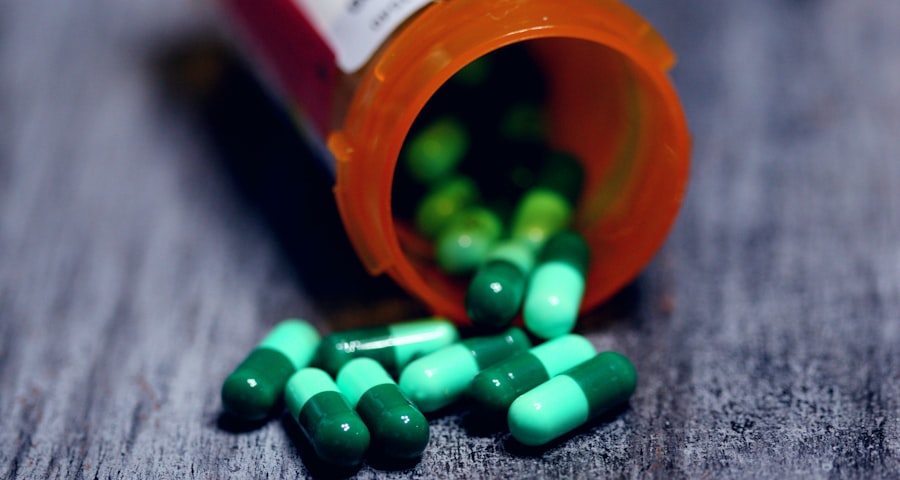
Halal Pharmaceuticals: The Sector Everyone Cites and Almost Nobody Studies
Halal pharmaceuticals and nutraceuticals are among the fastest-growing segments of the Islamic economy, and among the least understood. We examine gelatin, excipients, the doctrine of necessity, and why certification here is harder than in food.
GIMAC Editorial Team
·24 June 2026
·5 min read
Almost every survey of the halal economy names pharmaceuticals as a high-growth frontier. Almost none of them explain why it is so difficult. Halal food certification, for all its fragmentation, deals largely with visible ingredients and traceable supply chains. Pharmaceuticals deal with gelatin capsules sourced through three intermediaries, excipients present at fractions of a percent, enzymes used in manufacturing but absent from the final product, and a regulatory environment where substituting an ingredient can require years of re-approval.
The result is a sector with enormous demand, genuine theological complexity, and a research literature far thinner than its commercial importance warrants.
Where the Non-Compliance Actually Sits
Muslim patients are rarely troubled by the active pharmaceutical ingredient. The problems cluster in the parts of a medicine nobody markets:
- Gelatin: used in soft and hard capsules, and overwhelmingly derived from porcine or non-dhabiha bovine sources. This is the single largest point of concern.
- Magnesium stearate: a common lubricant that may be animal-derived.
- Ethanol: used as a solvent and preservative in syrups, tinctures and some vaccines.
- Glycerine: frequently animal-sourced, and present across an enormous range of formulations.
- Enzymes and processing aids: used during manufacture, often porcine-derived, and frequently absent from the ingredient declaration entirely.
The last category is where the certification problem becomes genuinely hard. A processing aid that does not appear in the finished product still passes through the manufacturing chain, and different certifying authorities take materially different views on whether its use renders the output non-halal.
The Doctrine of Necessity
Islamic jurisprudence has never treated medicine as identical to food. The principle of darura, necessity, permits otherwise prohibited substances where life or serious health is at stake and no permissible alternative exists. A related maxim, al-darurat tubih al-mahzurat, holds that necessity makes the forbidden permissible within strict limits.
In practice this means the overwhelming majority of Muslim patients may take a porcine-gelatin medication when no halal-certified equivalent is available, and most contemporary scholarly bodies have said so explicitly. The 1995 World Health Organization consultation on the Islamic ruling for medicines containing alcohol, and subsequent rulings from bodies including the Islamic Fiqh Academy, broadly affirm this position.
But necessity is a permission, not a preference, and this is where the commercial opportunity lives. Darura applies where there is no alternative. Where an alternative exists, the permission lapses. Every halal-certified formulation that reaches the market narrows the space in which necessity applies, and creates demand that did not previously have anywhere to go.
Why Substitution Is Slow
Manufacturers face a real constraint that critics of the industry often underestimate. Pharmaceutical formulations are approved as complete products, not as ingredient lists. Swapping bovine gelatin for a fish-derived or cellulose-based capsule shell changes dissolution profile, stability, moisture sensitivity and shelf life. In most jurisdictions that triggers bioequivalence testing and a regulatory variation, a process measured in years and millions of dollars per product line.
This explains the shape of the market. Halal-certified pharmaceuticals cluster heavily in:
- New products entering development, where a halal-compatible formulation can be designed in from the start at negligible marginal cost
- Over-the-counter and generic lines, where regulatory barriers to reformulation are lower
- Nutraceuticals and supplements, which face far lighter approval regimes and where the halal segment has grown fastest
The last of these is the commercially significant one. Vitamins, omega-3 preparations, probiotics, collagen and protein supplements sit in a category where reformulation is cheap, marketing claims are consumer-facing, and Muslim buyers are actively looking for certified options. Industry estimates place the halal nutraceutical segment in the tens of billions of dollars and growing considerably faster than the conventional supplement market.
Malaysia’s Regulatory Head Start
Malaysia remains the reference case. JAKIM extended halal certification to pharmaceuticals earlier and more systematically than any other national authority, and the resulting standard, MS 2424, gave manufacturers something most markets still lack: a clear, auditable specification to build against.
The effect was cumulative rather than dramatic. A published standard let contract manufacturers invest in compliant lines. Compliant lines made certified excipients commercially viable. Viable excipient supply lowered the cost of certification for the next entrant. Indonesia’s mandatory halal certification regime, phased in across product categories including pharmaceuticals, is now applying similar pressure at far greater scale, Indonesia being the largest Muslim-majority market in the world.
For manufacturers exporting into Southeast Asia, halal capability has shifted from a marketing differentiator to a condition of market access. That is a materially different commercial calculation.
The Vaccine Problem
No discussion of this sector is complete without acknowledging where it has caused real public-health harm. Uncertainty about porcine-derived trypsin and gelatin in vaccine production has contributed to hesitancy in several Muslim-majority countries, notably during polio and measles campaigns and again during COVID-19 vaccination programmes.
The scholarly consensus in each case has been broadly permissive, and the most effective responses have paired that consensus with substantive supply-side work: the Indonesian Ulema Council’s engagement with vaccine manufacturers, and efforts to develop demonstrably porcine-free production processes, both moved public confidence more than communication campaigns alone.
The lesson generalises beyond vaccines: religious assurance delivered late, defensively, and without manufacturing evidence behind it does not persuade. Assurance built into the product from the beginning does.
The Research Agenda
For a sector routinely described as a growth engine of the Islamic economy, the empirical base is remarkably thin. Several questions are wide open:
- How do Muslim patients actually reason about darura in practice, as distinct from how scholars say they should? Very little primary consumer research exists.
- What is the measurable willingness to pay for halal-certified equivalents where both options are available on the same shelf?
- How much of the observed hesitancy around specific medications is religious in origin, and how much is general institutional distrust wearing religious language?
- What would harmonised pharmaceutical halal standards across GCC, Southeast Asian and OIC markets be worth to manufacturers in avoided duplicate certification cost?
These are answerable questions, and they matter commercially and clinically. They are also precisely the kind of interdisciplinary work (jurisprudence, supply chain, consumer behaviour and public health at once) that the GIMAC community is unusually well placed to take on.
Published by
GIMAC Editorial Team
24 June 2026
GIMAC 17 · Alanya, Turkey · October 2026
Present at GIMAC 17
Submit your research on the topics explored in this article. Abstract deadline: 30 June 2026.